Components made of titanium or a titanium alloy are electrically contacted to a rack and then
dipped in an aqueous acid electrolyte in which it acts as an anode. A thin and very adhesive
layer of titanium oxide forms on the component's layer. The layer thickness can range between
200 and 900 nm and hence within a fraction of the wavelength of visible light. The light that
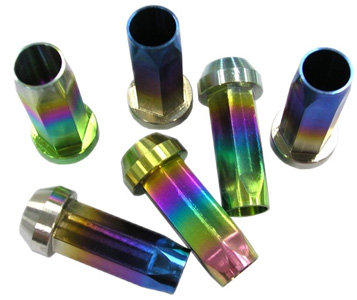
strikes the surface is reflected by the colorless layer and the layer base. Interference caused
by the layer (overlapping of the light rays) makes the layer look colored.
PROPERTIES
Besides the color effect, titanium oxide layers offer good electric isolation and
biocompatibility.
MATERIALS
The best results with color anodizing are obtained with the TiAl6V4 alloy. The resulting colors
are very lively, reproducible and of a good quality.
Ti2 can be coated with a layer having a wide color spectrum. Compared to TiAl6V4, the color
shifts vary within a range of blues and the colors are somewhat softer.
Pure titanium can be color-anodized in a reproducible manner in blue and yellow only. This
material is not suitable for decorative purposes.
APPLICATIONS
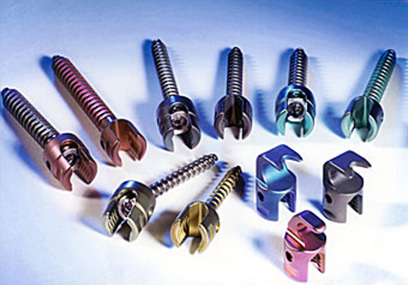
Color-anodizing is especially used in the field of medical engineering: titanium implants that
are left in the human body to heal bone fractures are color-anodized. This helps surgeons to
quickly identify components. The coated implants have a neutral behavior in the body. They do
not adhere to bones and tissues and they can be easily revealed after healing.
Owing to their biocompatibility and decorative appearance, these layers are also used in the
optics and jewelry industries, for instance, for watches or jewelry.
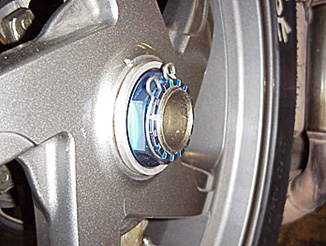
In the bicycle industry titanium ensures top resistance with a low weight. The color-anodized
surface of wheel nuts can meet, for instance, the design required by buyers.
Besides for its color, the oxide layer also serves as a diffusion barrier. Since the layer
offers good electrical isolation, it can also be applied in electrical engineering.